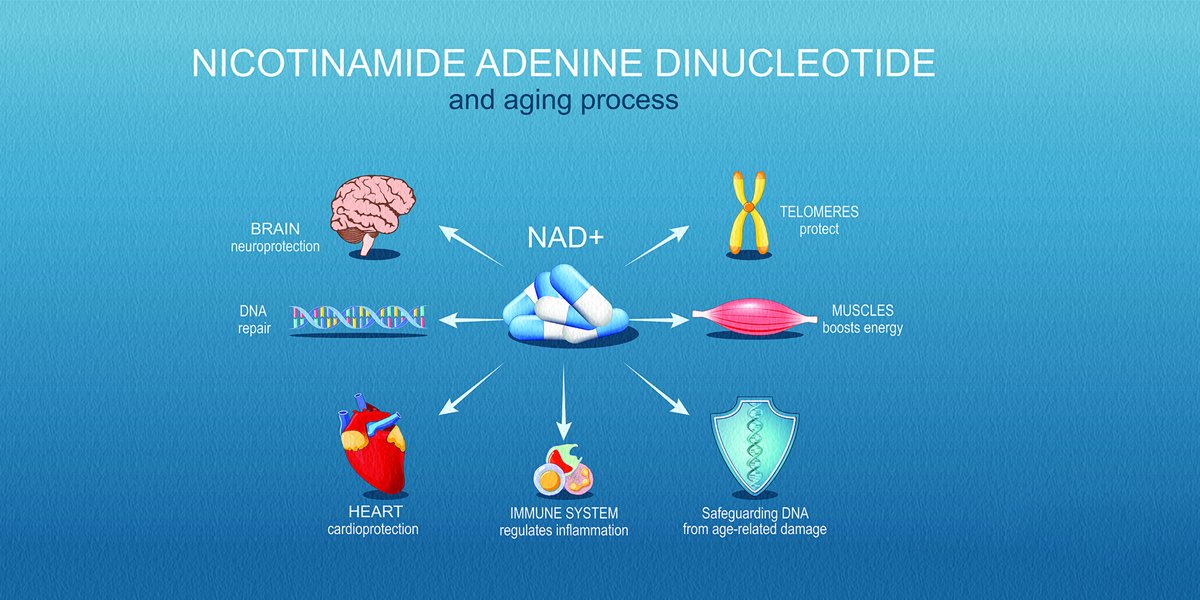
Understanding NAD+ and “Youth Repair”
NAD+ (nicotinamide adenine dinucleotide) is a vital coenzyme found in every cell of the body. It plays key roles in energy production (via ATP in mitochondria), DNA repair, gene expression (through sirtuins, often called “longevity genes”), inflammation regulation, and cellular metabolism.
Levels naturally decline with age—dropping by about 50% by middle age—contributing to fatigue, metabolic issues, cognitive decline, and age-related diseases like diabetes, Alzheimer’s, and cardiovascular conditions.
This decline has fueled interest in NAD+ as a “fountain of youth” molecule, with supplements marketed for “youth repair” promising rejuvenation, better skin, energy, and longevity.
These products typically don’t contain direct NAD+ (which has poor oral bioavailability and breaks down in the gut). Instead, they use precursors like:
• NMN (nicotinamide mononucleotide): Converts quickly to NAD+.
• NR (nicotinamide riboside): A stable form that boosts NAD+ via the salvage pathway.
• Niacin (nicotinic acid): A vitamin B3 form that supports NAD+ synthesis but can cause flushing.
Supplements are often sold as capsules, powders, or IV drips, with claims backed by celebrity endorsements and animal studies. But does it really work for youth repair? The short answer: Promising but overhyped. It boosts NAD+ levels reliably, with some evidence of health benefits, but robust proof for reversing aging in humans is limited. Here’s a balanced breakdown based on current science.
The Evidence: What Works and What Doesn’t
Strong Evidence: NAD+ Boosting Is Real and Safe (Short-Term)
• Multiple human trials show precursors like NMN and NR increase blood and tissue NAD+ levels by 1.5–2.7 times, even in older adults. For example:
• A 2024 crossover trial (26 adults, ages 20–80) using a multi-ingredient NAD+ booster (NR + NAMPT activators) raised whole-blood NAD+ consistently over 4 weeks, with no serious side effects.
• Doses of 250–1,000 mg/day NR or NMN are well-tolerated, with mild issues like nausea or flushing in <5% of users.
• A 2023 systematic review of 12 trials found oral NADH (a related form) improved quality of life, reduced anxiety, and lowered inflammation markers, with low side-effect rates.
Mixed Evidence: Potential Benefits for Aging Markers
Animal studies (mice, worms) are exciting: NAD+ boosters extend lifespan by 10–20%, improve mitochondrial function, enhance DNA repair, and reduce frailty. Human translation is slower, but emerging data shows:
• Energy and Metabolism: Small trials (e.g., 40 obese men) report better insulin sensitivity and fat oxidation after 12 weeks of NR, mimicking “youthful” metabolism.
• Muscle and Exercise: NMN (300–600 mg/day) improved endurance and recovery in runners and older adults, reducing muscle inflammation.
• Brain and Cognition: Preliminary Parkinson’s trials show symptom relief and brain NAD+ increases; one review suggests anti-Alzheimer’s potential via reduced nerve inflammation.
• Skin and Inflammation: A 2025 study found liposomal NAD+ reduced skin cell aging markers (p16, p21) by 15% and boosted delivery by 30%. (From X post analysis.)
However, many trials are small (n<50), short (4–12 weeks), and focus on healthy people—not those with advanced aging. No large, long-term studies prove lifespan extension or “youth reversal.”
Weak or Lacking Evidence: The Hype vs. Reality
• Longevity/Healthspan: No human data shows it extends life or fully reverses aging. A 2023 review called benefits “underwhelming” despite blood NAD+ rises. Mouse results don’t always translate—e.g., high doses shortened lifespan in some models.
• IV Drips: Popular for “quick youth repair,” but lack evidence beyond placebo; they may cause more side effects like chest tightness.
Public Sentiment (from X): Enthusiastic promoters tout it as a “master switch” for energy and anti-inflammation, but skeptics call it “hyped with weak evidence” for healthy people.
Risks and Caveats
• Side Effects: Rare but include flushing (niacin), nausea, fatigue, or headaches. High doses (>1g) may inhibit sirtuins or raise cancer risk in predisposed cells.
• Regulation: Supplements aren’t FDA-approved; quality varies. Third-party tested brands (e.g., Tru Niagen for NR) are safer bets, costing $30–100/month.
• Who Should Avoid?: Pregnant/breastfeeding people, those with liver/kidney issues, or on chemotherapy—consult a doctor.
Bottom Line: Worth Trying?
NAD+ precursors do work to elevate levels and may offer subtle “youth repair” perks like better energy or recovery, especially if you’re over 40 or stressed. But it’s no miracle—benefits are modest, and aging is multifactorial (diet, exercise matter more).
Start low (250–500 mg NMN/NR daily) if interested, but prioritize basics: Sleep 7–9 hours, eat niacin-rich foods (tuna, peanuts), exercise (boosts NAD+ naturally), and manage stress. Ongoing trials (e.g., for Parkinson’s, heart disease) could solidify its role by 2026–2028.
For now, it’s a solid maybe in the anti-aging toolkit, not a slam dunk. If symptoms persist, see a doc—don’t self-diagnose with supplements.