“First Woman Trainer Crushes the Derby: Golden Tempo Makes History!”
Cherie DeVaux had always been told she belonged in the stables, not in the winner’s circle. Born in a small Kentucky town not far from Churchill Downs, she grew up mucking stalls, exercising horses before dawn, and dreaming bigger than the men around her would allow.
By her thirties, she had earned a reputation as one of the sharpest assistant trainers in the business, but every time a top owner considered giving her a lead horse, doubts surfaced. “The Derby is no place for experiments,” they’d say. Cherie smiled through the rejections and kept working.
In late 2025, she took the biggest gamble of her life. With savings scraped together and a few loyal supporters, she claimed a temperamental but talented horse at a yearling sale.
The horse had fire in his eyes and a coat as dark as midnight—Cherie named him Golden Tempo. Most experts dismissed the pair. A woman trainer and a lightly raced horse?
The odds against them reaching the Kentucky Derby were enormous.
Cherie trained differently. While others pushed heavy workouts and aggressive schedules, she focused on trust, recovery, and mental sharpness. She studied equine psychology, used heart-rate monitors, and spent hours hand-walking Golden Tempo through the backstretch at dawn, talking to him like a partner.
The racing press called her methods “soft.” Cherie called them smart. By spring 2026, Golden Tempo had quietly won enough prep races to qualify for the Run for the Roses—barely.
Derby week crackled with electricity. Churchill Downs was packed with 150,000 fans, celebrities, and the usual sea of seersucker suits. The media barely mentioned Cherie except in “human interest” segments. Bookmakers listed Golden Tempo at 35-1.
Cherie stayed focused, tuning out the noise. On the morning of the race, she braided a small rose into Golden Tempo’s mane and whispered,
Today we show them what we’re made of.”
The gates loaded. The best runners in the country. The bell rang. “And they’re off!”
Golden Tempo broke cleanly but settled into mid-pack, conserving energy as the favorites dueled up front. Cherie stood stone-still in the owner-trainer section, binoculars glued to her horse.
Around the first turn, a rail spot opened. Jockey Jose Ortiz guided Golden Tempo into it with perfect timing. By the backstretch, he was fifth. The pace was blistering—exactly what Cherie had prepared him for.
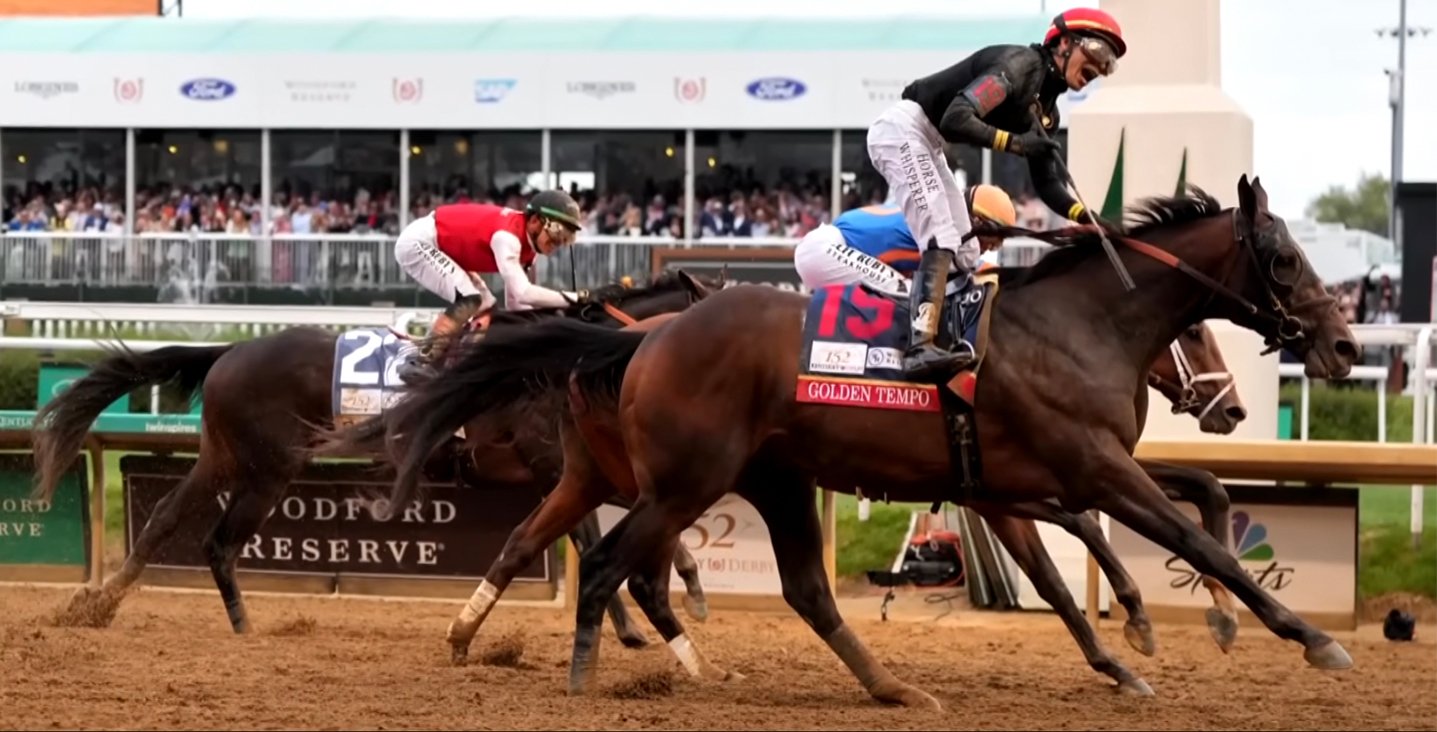
Down the stretch, the leaders began to tire. Golden Tempo unleashed the explosive closing kick her trainer had nurtured for months. She swept past two horses, then another.
In the final furlong, only the heavy favorite remained ahead. The roar of the crowd became deafening. Cherie’s heart hammered as Golden Tempo dug deeper, neck and neck, then a nose in front.
The stands exploded. Cherie dropped her binoculars and covered her mouth, tears streaming. The long wait, the doubts, the years of being overlooked—all of it vanished in that single moment.
When she reached the winner’s circle, the blanket of 600 red roses was already being draped over Golden Tempo. Elena hugged her horse’s neck, buried her face in the dark mane, and said, “We did it. We really did it.”
That victory changed more than the record books. Within weeks, young women trainers across the country reported new opportunities. Cherie became a symbol—not just of one historic win, but of persistence, intelligence, and belief in the face of tradition.
She never sought the spotlight, but she used it wisely, mentoring the next generation and reminding everyone that the greatest races are often won by those who were never supposed to be in them.