The Deliberate Genocide of Native American Children: Cultural Erasure Through Boarding Schools
For over a century, the U.S. government systematically ripped Native children from their families, banned their languages, cut their hair, and punished them for being Indian — all in the name of ‘civilizing’ them.
The American policy of separating Native American children from their families was a deliberate campaign of cultural erasure that spanned more than a century.
It aimed to assimilate Indigenous peoples into Euro-American society by severing ties to language, tradition, and community. While some frame it as a well-intentioned effort at “civilization,” the historical record reveals widespread coercion, abuse, and long-term trauma.
This article examines the origins, implementation, human cost, resistance, legacy, and ongoing reckoning with these policies.
Historical Context and Policy Origins
The separation of Native children built on earlier U.S. efforts to manage Indigenous populations amid westward expansion. The Indian Removal Act of 1830 under President Andrew Jackson forced tens of thousands from ancestral lands, most infamously along the Trail of Tears.
As reservations confined tribes and buffalo herds neared extinction, policymakers shifted from physical removal to cultural transformation.
The Civilization Fund Act of 1819 provided early federal support for missionary efforts to “civilize” Native Americans through education. By the late 19th century, this evolved into a systematic boarding school policy.
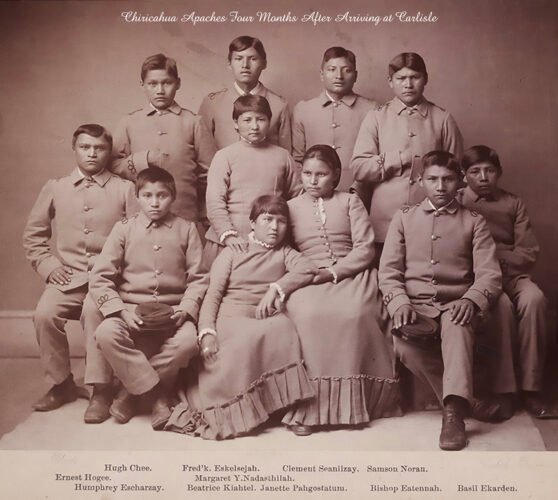
Captain Richard Henry Pratt, founder of the Carlisle Indian Industrial School in Pennsylvania (1879), famously declared: “Kill the Indian, and save the man.”
Pratt’s model—removing children far from reservations, enforcing military discipline, and replacing Native identities with English, Christianity, and vocational skills—became the blueprint.
The Dawes Act of 1887 complemented this by breaking up communal tribal lands into individual allotments, aiming to erode tribal structures and encourage farming on the Euro-American model. “Surplus” lands opened to non-Native settlement, accelerating dispossession.
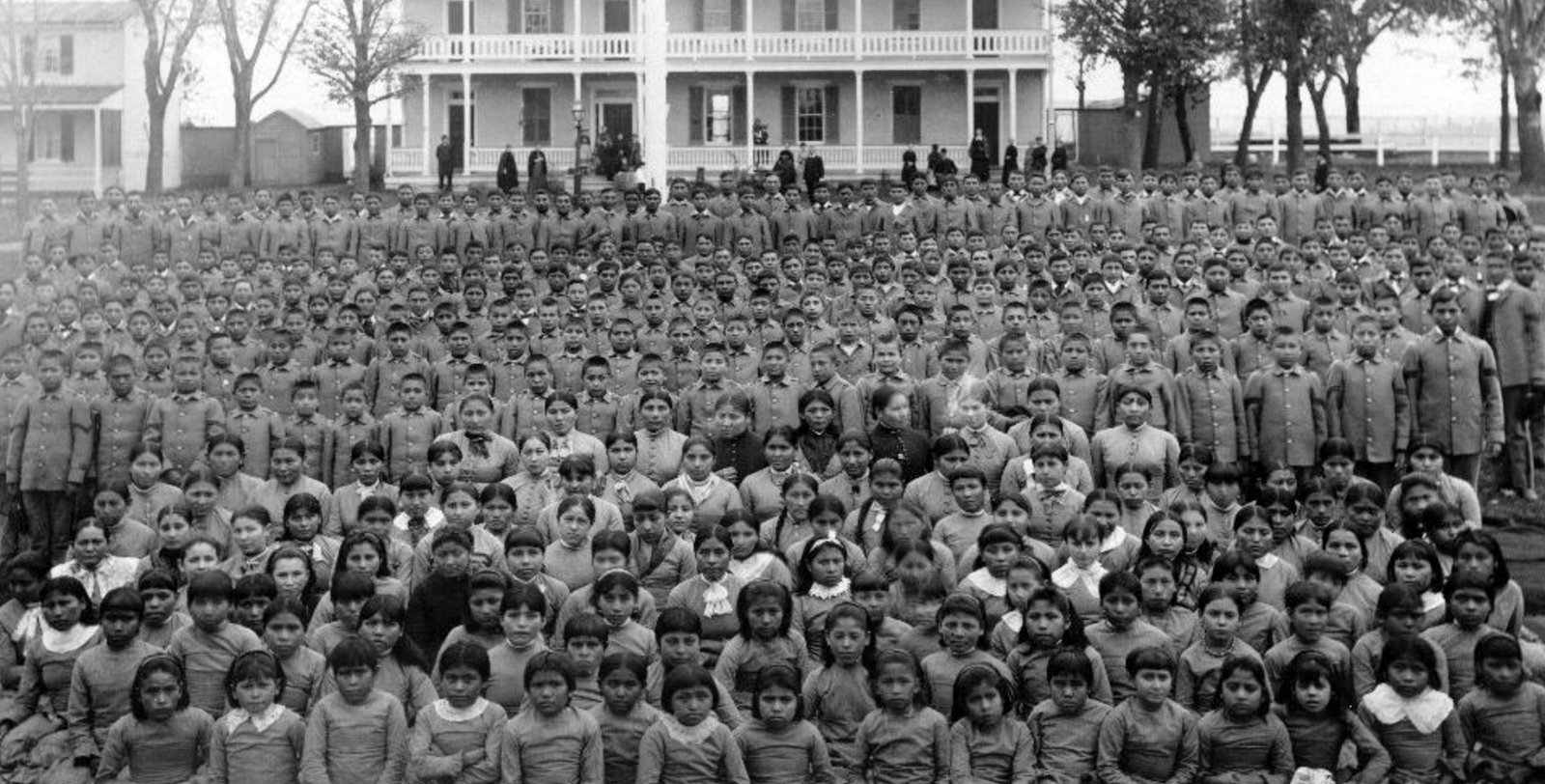
By 1926, nearly 83% of Native school-age children attended boarding schools. Over 500 such institutions operated, many church-run with federal funding.
Hundreds of thousands of children passed through the system from the 19th century into the 1960s and beyond.
Life Inside the Schools: Assimilation Through Coercion
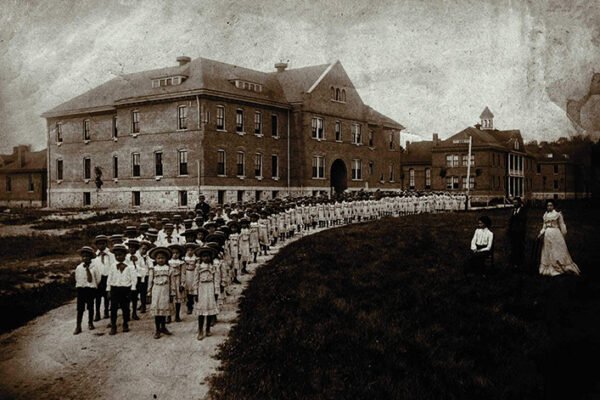
- Children arrived via government agents, sometimes under threat or outright abduction. Upon enrollment, they faced immediate transformation:
- Hair was cut short (a profound violation for many cultures where long hair held spiritual meaning).
- Traditional clothing was replaced with uniforms.
- Native languages were forbidden, with punishments ranging from beatings and solitary confinement to having mouths washed with soap.
- Children received new English names and Christian instruction, while Native spiritual practices were suppressed as “pagan.”
Daily life emphasized manual labor, vocational training (often menial), and basic academics. Overcrowding, poor sanitation, and inadequate nutrition were common. Disease—tuberculosis, influenza, trachoma—spread rapidly.
Physical and sexual abuse occurred at many sites, as later investigations confirmed.
The goal was total reprogramming: children were to return to reservations as “civilized” individuals who would abandon tribal ways and integrate into mainstream society.
In practice, many struggled in both worlds—alienated from family and culture, yet facing discrimination outside.
The Human Cost and Death Toll
The human toll was severe. The U.S. Department of the Interior’s Federal Indian Boarding School Initiative (launched 2021) documented at least 973 confirmed student deaths across federal schools from 1819–1969, with gravesites at dozens of locations.
Many deaths resulted from illness, neglect, or abuse; the true figure is likely higher due to incomplete records.
A Washington Post investigation raised the documented toll to over 3,100 deaths between 1828 and 1970, drawing on archives and other sources.
Causes included disease exacerbated by poor conditions, accidents, malnutrition, and documented cases of violence. Unmarked or poorly maintained graves underscored the devaluation of these young lives.
Survivors and descendants describe intergenerational trauma: disrupted family bonds, loss of language fluency, higher rates of substance abuse, mental health challenges, and weakened cultural transmission. Many who returned could no longer communicate fully with elders or participate in traditional practices.
Resistance, Resilience, and Reform
Native communities resisted from the outset. Parents hid children, petitioned agents, or protested conditions. Some students ran away, sabotaged rules, or secretly maintained traditions.
Over time, intertribal connections formed in the schools themselves, contributing to later pan-Indian activism.
Policy shifts emerged in the 20th century. The 1928 Meriam Report exposed abysmal conditions and recommended reforms, criticizing the assimilation focus.
The Indian Reorganization Act of 1934 began reversing some Dawes-era land policies. Boarding school enrollment declined after World War II, though the system persisted.
The Indian Child Welfare Act (ICWA) of 1978 marked a pivotal response.
Congress found that 25–35% of Native children had been removed from families in the preceding decades, often placed in non-Native homes with little regard for cultural ties.
ICWA established standards prioritizing tribal jurisdiction, family preservation, and placement with relatives or tribal members in custody cases. It aimed to protect tribal stability and child well-being.
Legacy and Contemporary Reckoning
The boarding school era contributed to ongoing disparities. Native communities face elevated rates of poverty, health issues, and cultural loss traceable in part to these policies.
Yet resilience persists: language revitalization programs, cultural education initiatives, and tribal sovereignty efforts demonstrate enduring strength.
Recent developments include
- Secretary Deb Haaland’s Boarding School Initiative, with reports detailing federal involvement, church roles, and funding (over $23 billion appropriated historically).
- President Biden’s 2024 apology for the program’s harms.
- Calls for a federal Truth and Healing Commission to document survivor stories, investigate further, and recommend reparative steps.
- State-level probes, such as in Michigan, into abuses and potential criminal acts.
Debate continues over terminology. Many Native leaders, scholars, and reports describe the policies as cultural genocide or ethnocide—intentional destruction of group identity through forcible child transfer, meeting elements of the UN Genocide Convention (e.g., causing serious harm, transferring children to another group).
Others emphasize assimilationist intent over physical extermination, noting that education was presented as benevolent (though coercive in execution) and that some graduates gained skills.
Critics argue the “genocide” label risks oversimplifying complex motives or equating it with events involving mass killing. Truth-seeking requires acknowledging both the stated goals of “civilizing” and the documented coercive, abusive reality.
Assimilation largely failed in its ultimate aim
Tribes endured as distinct political and cultural entities. Reservations remain, languages are being revived, and sovereignty assertions (including ICWA challenges) continue. Yet the human and cultural damage was profound and generational.
Toward Healing
Confronting this history demands honesty: the U.S. government, often in partnership with religious organizations, pursued policies that prioritized land acquisition and cultural uniformity over Indigenous rights and consent.
Full reckoning involves accurate education in schools, support for language and cultural programs, attention to unmarked graves, and meaningful consultation with tribes on reparations or healing initiatives.
Native voices—survivors, elders, and leaders—must guide this process.
As one survivor reflected, education was something done to them, not for them. True progress lies in restoring agency, honoring treaties and sovereignty, and ensuring future generations inherit strength rather than solely trauma.
The story of Native American children taken from their communities is not merely a closed chapter of 19th-century policy. It is a living legacy shaping tribal nations today.
Acknowledging the full scope—coercion, loss, abuse, and resilience—allows America to move beyond denial toward justice and mutual respect. Healing is possible, but only through truth.